

Does Mat Thickness Determine Durability?

Does Mat Thickness Determine Durability?
One of the most common questions when choosing a car mat is:
“Is a thicker mat always more durable?”
Short answer: No.
For car mats, thickness alone is not an indicator of quality or durability. The real factors that determine durability are the material used, the manufacturing technology, and the density of the material.
What Factors Determine a Mat's Durability?
For a mat to be long-lasting and comfortable, the following criteria matter:
• Type of material used
• Density of the material
• Manufacturing technology
• Flexibility and form memory
• Resistance to wear and cracking
Example:
❌ Thick but low-quality PVC mats
✔️ can deform much faster than high-quality 2 mm TPE mats.
In other words, more thickness does not mean more quality.
What Is TPE? Why Is It the Best Mat Material?
TPE (Thermoplastic Elastomer) is one of the most advanced and safest materials used today in the production of car mats and trunk liners.
Advantages of TPE mats:
• 🌱 100% recyclable
• 🚫 Odorless
• ❄️ Does not harden or crack in hot or cold weather
• 🔁 Retains its shape for a long time thanks to its flexible structure
• 🧽 Easy to clean
• 🚗 Fits the vehicle perfectly, does not slip
For this reason, TPE is also frequently preferred for OEM (original equipment) mats used by premium automotive brands.
What Should the Ideal Thickness Be for TPE Mats?
The ideal thickness for TPE mats is on average 2 mm.
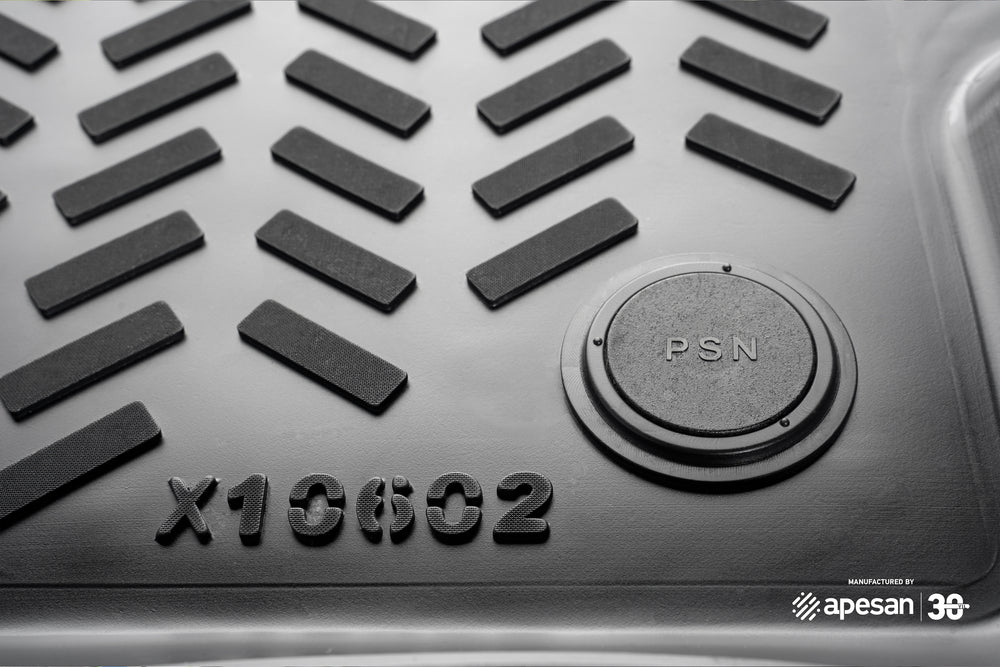
The approximately 2 mm thickness used in PSN TPE mats is a deliberate choice based entirely on engineering calculations.
Why Not Thicker?
• Can make pedal use more difficult
• Creates unnecessary weight
• More thickness does not mean more quality
Why Not Thinner?
• Very thin mats cannot hold their shape
• Edge curling occurs over the long term
👉 Conclusion:
For TPE material, 2 mm is the optimum thickness in terms of durability, comfort, and driving safety.
Why Can Mats That Look Thicker Actually Be Lower Quality?
Some mats may look thicker and fuller at first glance. This is usually due to:
• A spongy internal structure
• Low-density filling
• Soft but non-durable raw materials
Mats like this:
• Get crushed quickly
• Lose their shape
• Are more prone to wear and tearing
Visual thickness does not mean quality.
Is Thickness Important for Trunk Liners?
As with mats, thickness is a misleading criterion for trunk liners as well.
What matters is:
• Edge height
• Leak-proofing
• A perfect fit for the vehicle
• Liquid retention capacity
PSN trunk liners:
• Are liquid-proof
• Are odorless
• Provide a perfect fit thanks to vehicle-specific molds
Thickness alone does not determine these properties.
How Should You Choose the Right Car Mat?
When choosing a mat and trunk liner, you should focus not on thickness but on the following criteria:
✅ Made of TPE material
✅ Vehicle-specific mold
✅ Odorless
✅ Non-slip base
✅ Easy to clean
✅ Retains its shape for a long time
Conclusion: Not Thin vs. Thick, but the Right Material
When choosing a car mat and trunk liner, “thickness” alone is not a measure of quality. What matters is the right material, the right production, and the right engineering.
PSN TPE mats combine an ideal thickness of approximately 2 mm with high material quality, delivering long-lasting, comfortable, and safe use.